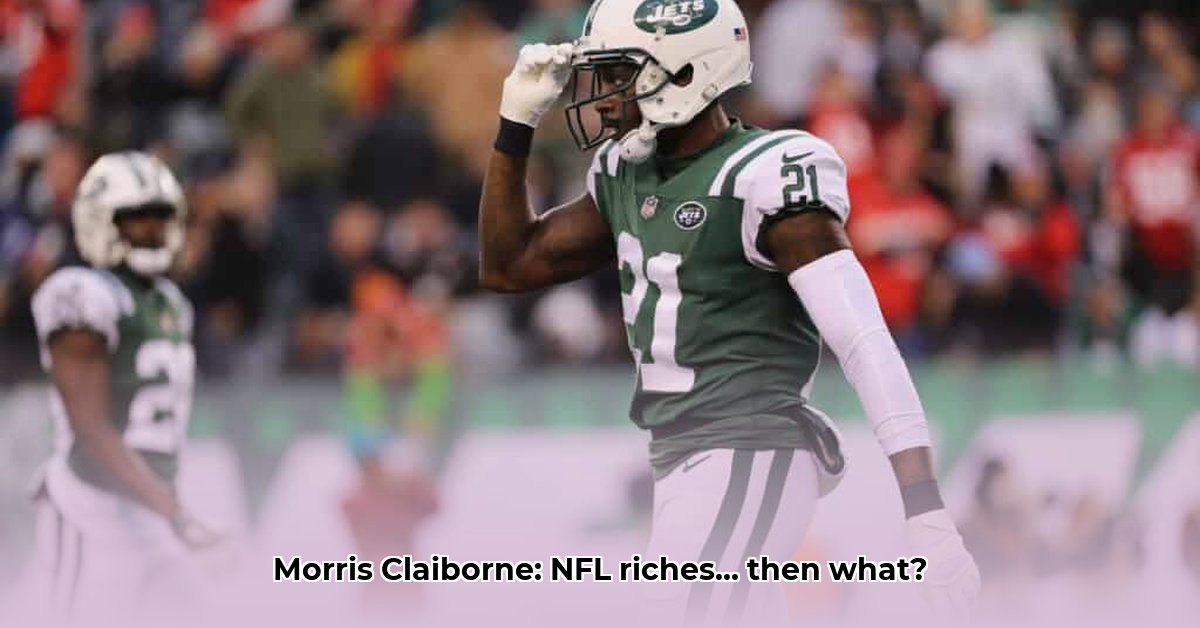
Morris Claiborne's NFL career is a compelling case study in the unpredictable nature of professional sports and the importance of financial planning. Drafted sixth overall in 2012, Claiborne's early promise as a top cornerback from LSU was significantly hampered by recurring injuries, leaving his net worth a subject of much speculation. This article explores the factors influencing his earnings, both positive and negative, offering a reasoned estimation of his current financial standing. For more information on researching net worth, see this helpful guide: Net Worth Research.
The Highs and Lows of a Professional Athlete's Career
Claiborne's high draft position translated into a substantial initial contract, setting the stage for significant financial success. However, a series of debilitating injuries – hamstring pulls, wrist problems, and others – dramatically curtailed his playing time. This directly impacted his on-field earnings, limiting his opportunities to garner lucrative endorsement deals and increasing the risk of contract negotiations yielding less favorable terms after initial injury-ridden seasons. How much did these injuries impact his earning power? The answer is significant, as we will see.
Did you know that a player's value isn't just determined by skill but also by reliability and availability? Many sources indicate that Claiborne's injury issues cost him millions in potential earnings over the course of his career. This demonstrates the unpredictable and fragile nature of a professional athlete's financial security.
Deconstructing Claiborne's Financial Picture
Pinpointing Morris Claiborne's exact net worth proves challenging due to the private nature of athletes' financial information. Public records don't provide comprehensive details of his assets, investments, or business ventures. While some estimates suggest a net worth in the low six-figures, others propose a figure closer to seven figures. This wide range underscores the difficulties of accurately assessing an athlete's wealth without access to their complete financial statements.
It's important to remember that even seemingly reliable estimates are often based on educated guesses, considering comparable players' earnings and career arcs. This approach is inherently inexact, making a precise determination of Claiborne's net worth currently impossible. However, analyzing similar high-draft picks facing similar injury challenges allows for a reasoned approximation.
Post-NFL Prospects and Financial Strategies
Claiborne's financial future depends heavily on his post-NFL career choices. He could pursue coaching, leveraging his experience to mentor aspiring athletes. Alternatively, he could venture into broadcasting, applying his football expertise as a commentator or analyst. Entrepreneurship or strategic investments in diverse fields, such as real estate, represent other potential avenues for financial success.
What steps can a former athlete like Claiborne take to secure his financial future? Strategic planning is key. This includes managing existing debts, investing wisely in diversified portfolios (stocks, bonds, real estate), and pursuing multiple income streams. Effective financial planning is crucial, particularly given the inherent unpredictability of a professional sports career.
Understanding the Key Factors
Several key aspects significantly influenced Claiborne's overall financial picture:
High Draft Status: The sixth overall pick guaranteed a substantial initial contract which acted as the initial foundation of his financial standing.
Significant Injuries: Recurring physical setbacks considerably limited his playing time, negatively impacting his salary and endorsement opportunities.
Data Scarcity: The lack of public financial information makes precise net worth calculation challenging, relying on indirect estimations.
Post-NFL Career: Claiborne's post-retirement professional endeavors will significantly shape his long-term financial security.
The career of Morris Claiborne serves as a compelling illustration of the complex interplay between athletic talent, unforeseen circumstances, and the ultimate importance of strategic financial planning. While his on-field success may be debated, the need for diligent financial management remains a consistent truth in the world of professional sports.